All Categories
Category 03

Concealed Blinds for Shaped Windows

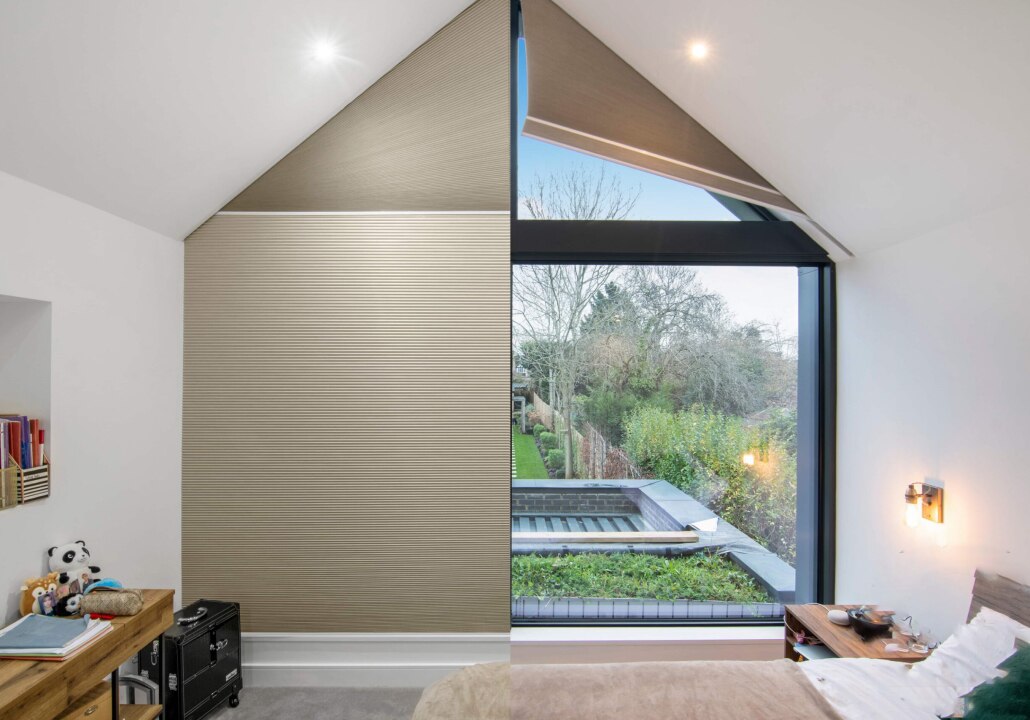
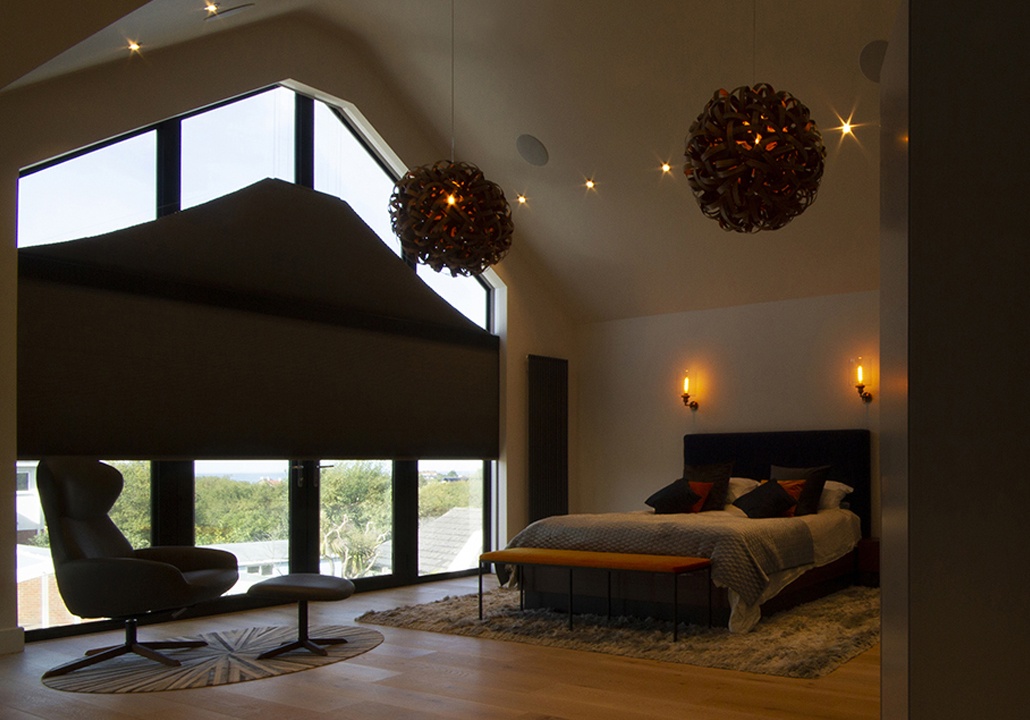
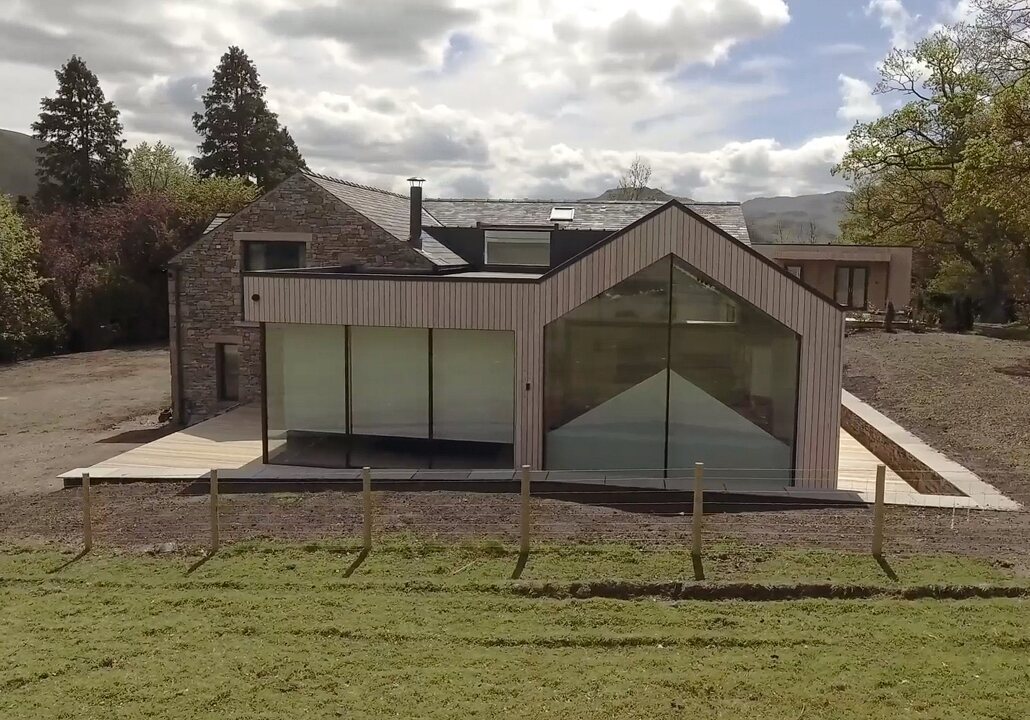
Triangular, arched, trapezoidal and raking openings are notoriously difficult to shade. Our shaped-window solutions use bottom-up or top-down cellular and roller configurations so the blind body can live along the lowest rail and rise up into the shape.

Configurations

4 Ways to Conceal

Each configuration can be sized to your specific opening. See Technical Drawings and BIM files for exact details.

Bottom-Up Cellular Blinds
01 — Configuration

Bottom-Up Cellular Blinds

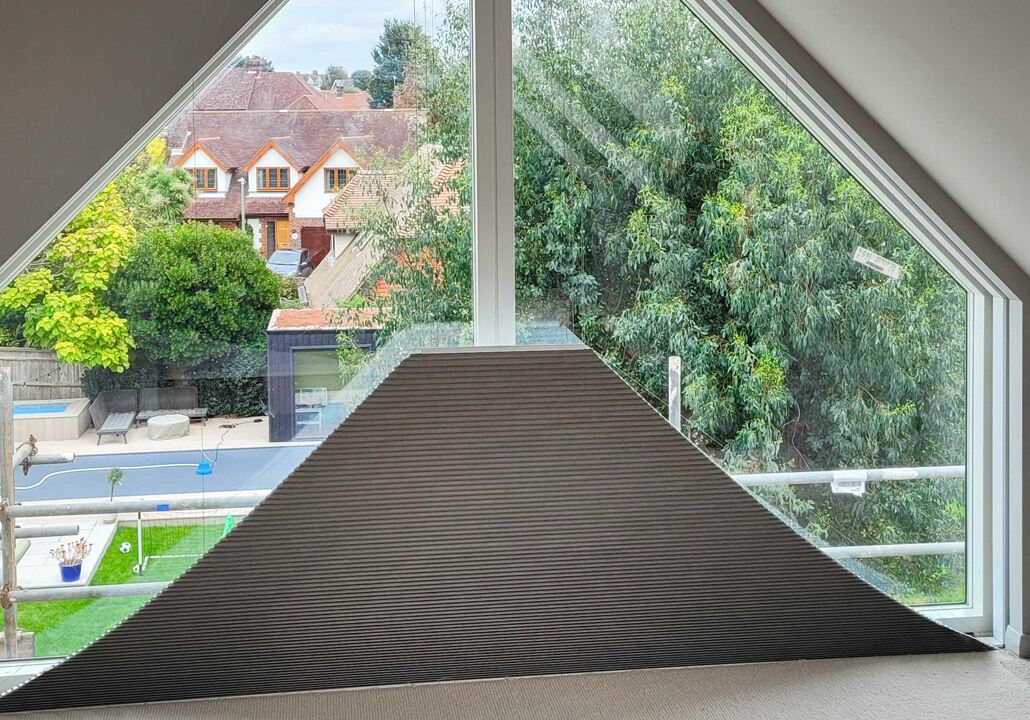
Cellular stack sits in a hem-bar box at the sill and rises up into the shape of the window — maximum daylight at the top.

  • Hem bar box concealed in the floor or sill
  • Works with triangles, trapezoids and raking windows
  • Preserves the architectural outline at the top
Bottom-Up Roller Blinds
02 — Configuration

Bottom-Up Roller Blinds

Roller blind version of the same idea — simpler mechanism, slightly less fabric flexibility.

  • Roller cassette concealed at the sill
  • Flat fabric rises into the opening
  • Best for lightly raking triangular glass
Top-Down Cellular Blinds
03 — Configuration

Top-Down Cellular Blinds

Cellular blind concealed at the apex, dropping down into the window — used where floor-level access is impossible.

  • Cellular stack lives at the apex of the shape
  • Blind drops down the sloping edges
  • Selected where a sill-mounted hem bar is impractical
Bottom-Up Cellular in an S Pelmet
04 — Configuration

Bottom-Up Cellular in an S Pelmet

Hem bar box integrated into an S-Series pelmet that sits immediately in front of the shaped window.

  • No floor intervention needed
  • Pelmet front allows plaster-in finishing
  • Ideal for retrofits into shaped windows
FAQ

Frequently Asked

The questions specifiers and installers ask most often when drawing up shaped windows.

Around 25–35mm wide, depending on the fabric and stack. It sits flush with the floor and accepts a brushed slot cover.